
Introduction: Understanding the Nine Divine Forms of Goddess Durga
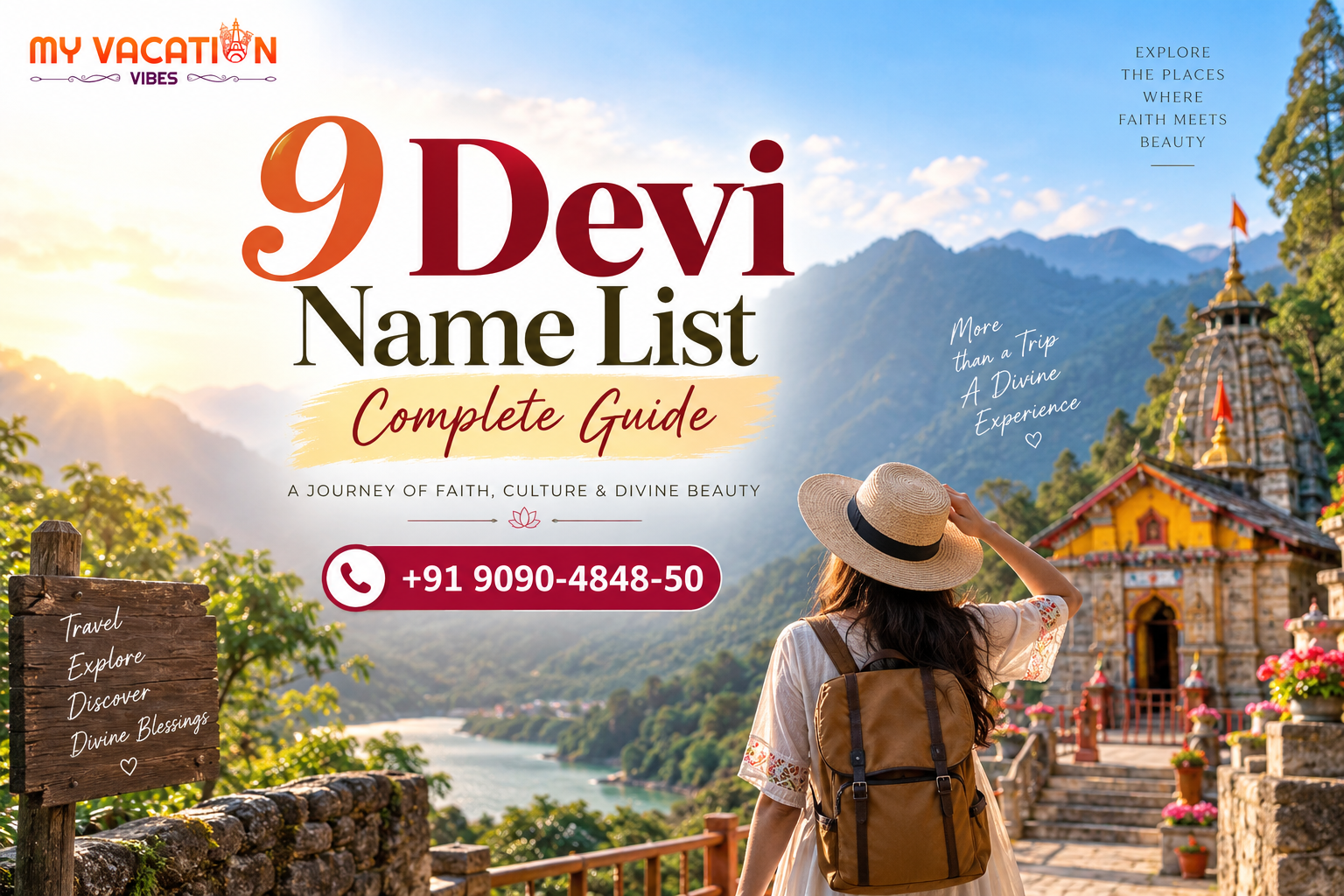
The nau devi name is commonly searched by devotees and travellers who want to understand the nine forms of Goddess Durga worshipped during Navratri. Known collectively as Navadurga, these forms are Shailaputri, Brahmacharini, Chandraghanta, Kushmanda, Skandamata, Katyayani, Kalaratri, Mahagauri, and Siddhidatri.
For travellers, learning about these forms also opens the door to India's rich tradition of Devi temples and Shakti pilgrimage. From famous Himalayan shrines to regional temples, each destination has its own history, rituals, architecture, and local traditions. For help planning a spiritual trip across India, contact MyVacationVibes at +91 9090-4848-50.
What Are the 9 Durga Devi Names?
The nine forms of Durga are traditionally known as the Navadurga. One form is associated with each of the nine days of Navratri, creating a spiritual sequence that devotees follow during the festival.
1. Shailaputri
Shailaputri is worshipped on the first day of Navratri and is traditionally described as the daughter of the Himalayas. Her name represents the mountain-born form of the Goddess and is associated with strength and stability.
2. Brahmacharini
Brahmacharini is the second form of Navadurga. She represents devotion, discipline, and spiritual determination. Devotees traditionally worship this form while seeking inner strength and dedication.
3. Chandraghanta
Chandraghanta is worshipped on the third day. She is traditionally depicted with a crescent moon on her forehead and represents courage, protection, and readiness to overcome difficulties.
4. Kushmanda
Kushmanda is the fourth form and is associated with creative energy and cosmic power. Traditional accounts describe her as a radiant form of the Goddess connected with the creation and sustenance of the universe.
5. Skandamata
Skandamata is the fifth form of Durga and is associated with motherhood and nurturing strength. She is traditionally depicted with her son Skanda, also known as Kartikeya.
6. Katyayani
Katyayani is the sixth form and is strongly associated with the warrior aspect of the Goddess. Traditional accounts connect her with the destruction of the demon Mahishasura.
7. Kalaratri
Kalaratri is the seventh form and represents the fierce aspect of Durga. Although her appearance is traditionally described as formidable, she is also associated with protection and the removal of fear.
8. Mahagauri
Mahagauri is the eighth form and represents purity, serenity, and compassion. She is traditionally portrayed as a calm and radiant form of the Goddess.
9. Siddhidatri
Siddhidatri is worshipped on the ninth day of Navratri. Her name is associated with the granting of siddhis or spiritual accomplishments, and she represents the culmination of the Navadurga sequence.
Who Are the 9 Avatars in Navratri?
The nine forms worshipped during Navratri are Shailaputri, Brahmacharini, Chandraghanta, Kushmanda, Skandamata, Katyayani, Kalaratri, Mahagauri, and Siddhidatri. They are more accurately described as the nine forms or manifestations of Durga, rather than nine separate incarnations in the ordinary sense.
Different Hindu traditions can follow variations in the forms or sequence of Devi worship. For example, Drik Panchang notes that some South Indian traditions worship a different set of nine forms, showing why regional practices should be respected when discussing Navratri traditions.
What Are the 32 Powerful Names of Durga?
The Durga Dwatrinsh Naammala is a traditional collection of 32 names of Goddess Durga. These names are distinct from the nine Navadurga forms and are associated with different qualities and powers attributed to the Goddess.
The names include Durga, Durgatishamani, Durgapadvinivarini, Durgamacchedini, Durgasadhini, Durganashini, Durgatoddharini, Durganihantree, Durgamapaha, and other traditional names.
This distinction is useful for travellers researching Devi worship because the nine Navadurga forms, 32 names, 108 names, and various Shakti traditions are different devotional frameworks rather than interchangeable lists.
What Are the 9 Avatars of Dasara?
The nine forms of Durga are primarily associated with the nine days of Navratri, while Dussehra or Vijayadashami marks the tenth day and has its own religious and cultural significance.
In many traditions, Dussehra celebrates the victory of good over evil and is associated with the victory of Goddess Durga over Mahishasura. In other regional traditions, the festival is connected strongly with Lord Rama's victory over Ravana. Therefore, the phrase “nine avatars of Dasara” is not the standard religious description; the nine forms belong to Navadurga and are worshipped during Navratri.
Nau Devi Temples and Shakti Pilgrimage in India
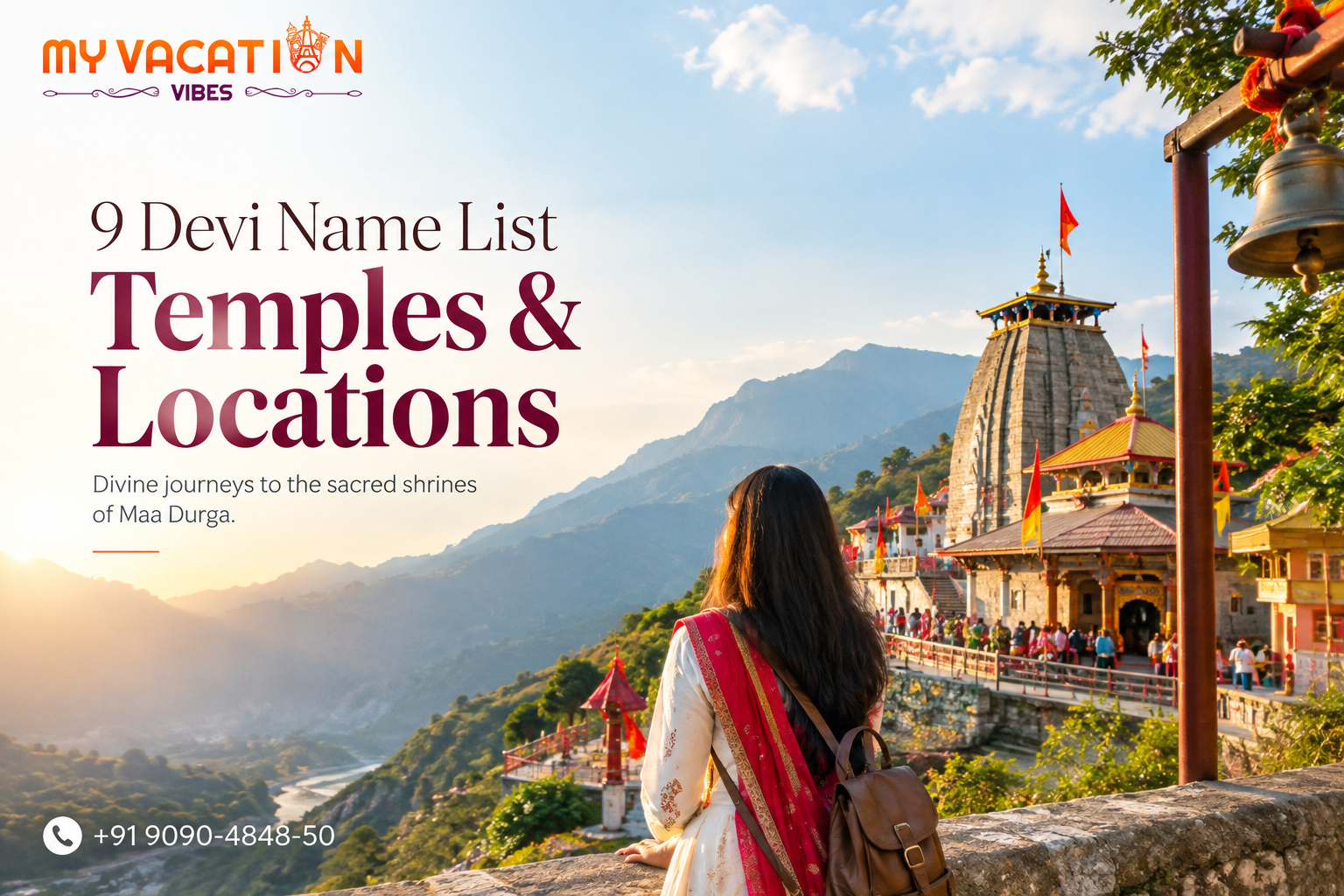
India has a vast network of temples dedicated to Devi in her many forms. Some are directly associated with Navadurga worship, while others are important regional Shakti shrines with their own legends, rituals, and pilgrimage traditions.
A journey to these temples is not only a religious experience but can also introduce travellers to local architecture, food, festivals, landscapes, and cultural traditions.
Exploring the 9 Devi Mandir Tradition
The phrase 9 devi mandir can refer to different groups of nine Devi temples depending on the region and pilgrimage tradition. It is therefore important to check the specific temple circuit being discussed rather than assuming that every reference to nine Devi temples means the same nine shrines.
In North India, devotees may encounter important Devi pilgrimage circuits in the Himalayan region, while other states have their own groups of temples and local traditions.
Parappukadu Devi Temple and Regional Devi Worship
Parappukadu Devi Temple is an example of how Devi worship extends beyond the commonly known Navadurga list. Regional temples across India often have their own names, legends, annual festivals, and forms of worship.
Travellers interested in Devi pilgrimage should research local temple customs before visiting, especially regarding opening hours, dress expectations, photography rules, special पूजा timings, and festival crowds.
Why Visit Shakti Temples During Navratri?
Navratri is one of the most important periods for devotees visiting Goddess Durga temples. Temples are often decorated, special prayers are performed, and local communities organise cultural and religious activities.
For travellers, visiting during this period can provide a deeper understanding of regional traditions. However, popular temples can become extremely crowded, so advance planning and respect for local customs are essential.
Famous Regions for Devi Temple Travel
Himachal Pradesh
Himachal Pradesh is home to several important Devi temples, including shrines associated with long-standing Shakti traditions. The mountain setting adds a distinctive character to a spiritual journey.
Jammu and Kashmir
The Himalayan region around Jammu has several important temples dedicated to different forms of the Goddess. Pilgrims can combine temple visits with the region's cultural and scenic attractions.
West Bengal
West Bengal has a particularly strong tradition of Goddess worship, with Durga Puja becoming one of the state's most important cultural celebrations. Kolkata is especially famous for its artistic pandals and community celebrations.
Gujarat
Gujarat is closely associated with Navratri celebrations, especially Garba and Dandiya. Travellers can combine temple visits with vibrant evening cultural events during the festival.
How to Plan a Nau Devi Spiritual Trip
A Devi temple journey requires more preparation than an ordinary sightseeing holiday because some shrines are located in mountainous or remote areas. Check transportation, accommodation, weather conditions, temple schedules, and local travel requirements before leaving.
If travelling during Navratri, book accommodation and transport well in advance. Popular pilgrimage destinations can experience significant crowds during the nine-day festival.
What Should You Keep in Mind When Visiting Devi Temples?
Dress modestly and follow the specific customs of each temple. Some shrines may restrict photography or require visitors to leave footwear and certain belongings outside designated areas.
Avoid treating religious ceremonies purely as tourist attractions. Respect devotees, queues, temple staff, and local traditions, and follow instructions regarding darshan and photography.
Frequently Asked Questions
1. What are the nine forms of Goddess Durga?
The nine traditional Navadurga forms are Shailaputri, Brahmacharini, Chandraghanta, Kushmanda, Skandamata, Katyayani, Kalaratri, Mahagauri, and Siddhidatri.
2. Are Navadurga and the 32 names of Durga the same?
No. Navadurga refers to nine forms of Durga worshipped during Navratri, while the 32 names belong to a separate traditional name-list known as the Durga Dwatrinsh Naammala.
3. Why are nine forms of Durga worshipped during Navratri?
The nine forms are traditionally worshipped across the nine days of Navratri, with a different form associated with each day. The sequence is widely followed, although regional traditions can differ.
4. What does Navadurga mean?
Navadurga literally refers to the nine forms of Goddess Durga. These forms represent different aspects of the Goddess and are traditionally worshipped during Navratri.
5. Can I visit Devi temples during Navratri?
Yes. Navratri is an important period for Devi worship, but popular temples can become very crowded. Check temple timings, local rules, transportation, and accommodation availability before travelling.
Conclusion: Experience India's Rich Devi Temple Traditions
The story of the nine forms of Durga goes far beyond simply memorising a list of names. Shailaputri, Brahmacharini, Chandraghanta, Kushmanda, Skandamata, Katyayani, Kalaratri, Mahagauri, and Siddhidatri represent a rich devotional tradition followed during Navratri.
For travellers, exploring Devi temples can combine spirituality with India's architecture, landscapes, festivals, food, and regional culture. Whether you are planning a pilgrimage or a cultural journey, understanding the traditions beforehand can make the experience more meaningful.
Plan your spiritual and cultural holiday with MyVacationVibes. For customized travel assistance and destination planning, visit the MyVacationVibes website or call +91 9090-4848-50.
Author: James
James is a professional travel writer creating informative destination guides, pilgrimage travel content, and practical holiday advice for modern explorers.














Write a comment ...